Run The Football! It’s more than just a mantra uttered by old coaches and fans after they watch their team stumble on a play through the air. Running the ball is an approach to the game. It’s an overarching decision to ignore the glitz and glamor of the modern passing game and instead slowly chip away at a defense one or two or three yards at a time. At its core it’s a strategy as old as the game of football itself, and for a while it looked like it was on the verge of extinction.
When the air raid offense was introduced in the 1980’s by Hal Mumme and Mike Leach it seemed gimmicky. How was a team supposed to win without a consistent run game? Air raid football was meant for teams that needed some flash or allure to try and upset a bigger program, not for a program that could recruit big name talent with big name athleticism. The flash of the long ball, however, was inescapable and as time went on air raid concepts began to sneak their way into football at all levels. Regardless of if it was through a quarterback guru, or an offensive analyst, the long ball became a staple of offenses across the sport. As football entered the 21st century the NFL realized the marketability of big passing plays and began to cater the rules of the game to fit the needs of passing focused offenses. The shift has caused a complete alteration of the way in which teams are managed and salary cap allocated as wide receivers continue to demand more money with each passing year. In contrast the running back position has seemingly been left in the dust. Sure, there are a few names we all highlight and celebrate, however the general consensus among teams is that there is a certain age or number of hits that a back can take before they decide that they’re no longer worth their salary and cut ties with them.
There is a principle in physics that with every action there must also come an equal and opposite reaction. As teams have begun to adjust their defenses with leaner pass focused linebackers and safeties, offenses have begun to focus on adding weight and athleticism to their backfield creating opportunities by running directly at a sport which was so eager to lean backwards. As these opportunities have grown so too has the spotlight on running backs as they continue to torch defenses across football and put their ability on display.
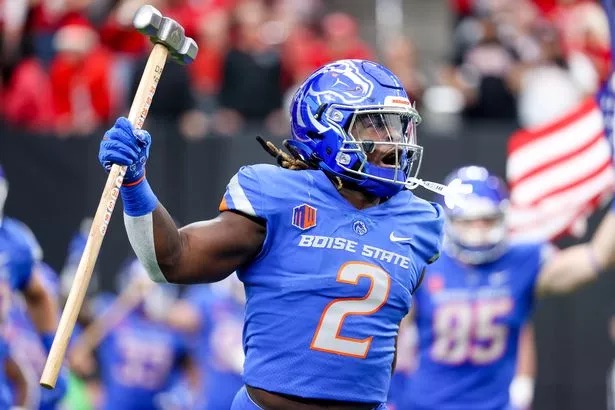
In college football the Boise State Broncos have been known for their own version of a pass heavy defense producing outrageous passing yard numbers and making a mark on the Mountain West conference. Enter Ashton Jeanty. The Broncos’ running back has taken college football by storm leading the entirety of division I with over 1,500 rushing yards this season outranking the next closest back by 300 yards. Teams have been completely incapable of stopping Jeanty, who has garnered the majority of his yards (914 at the time of this article) after contact. The Broncos’ elite rushing attack has caused teams to place additional defenders in the box, opening up opportunities in the passing game and creating a team which is virtually unstoppable on the offensive side of the ball. Jeanty’s stiff stance has even drawn comparison to Halloween antagonist Michael Myers as he prepares to run down his opponents, instilling more fear into defenses than any villain could. In the current Heisman odds Jeanty is currently ranked 4th. The reason behind this is potentially due to the lower level of opposition in the Mountain West Conference, however he currently has more rushing touchdowns than fellow Heisman hopeful, Oregon Quarterback, Dillon Gabriel has passing touchdowns. Whether Jeanty wins the Heisman or not, the impact of this season is undeniable as he continues to play Boise State into position to earn the final College Football Playoff spot and earns himself an eventual place on an NFL roster.
In the NFL, despite the resurgence of the usage of the running back, highlighted in offenses such as that of Kyle Shanahan of the San Francisco 49ers, the question has shifted towards the longevity of these athletes. All athletes age, however advanced statistics and internal analytics has told NFL general managers that after a running back reaches the 28-32 year old age range they are no longer worth their contracts. Its these thoughts that allowed the movement of two key backs this season: Saquon Barkley and Derrick Henry. These two players need no introduction they’ve produced and been on the main stage since their college football careers, but it’s the fact that these players carry a history that scared away general managers. The simple thought was that the return would not be worth the value and Barkley and Henry have done more than enough to prove that thought wrong.
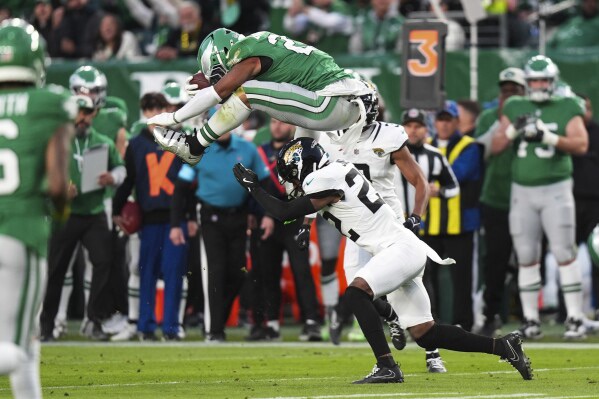
Barkley’s high-level performance during his early tenure with the Eagles has had Giants fans at a loss, as their general manager broadcast to the world that he thought he was simply not worth the money. Now the Eagles sit with a 6-2 record eying a potential playoff run on the back of an offense whose motor is their star running back, while the Giants stare down another year of rebuilding as their team continues to fail to find a way to win. Last week’s reverse hurdle against the Jaguars only showed to prove how versatile and productive of an athlete Saquon Barkley is, and only further provided a reason his former general manager Joe Shoen may be moving next offseason.
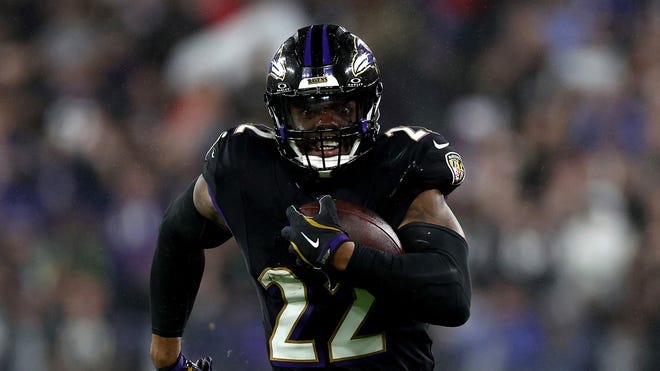
Derrick Henry has always been a freak athlete. A 6’3 250lbs running back who runs a 4.5 second 40-yard dash and looks to be made of pure muscle is a figure that would strike fear into the heart of any man brave enough to try and tackle him. Henry’s career speaks for itself, he’s the last running back to win the Heisman trophy, he’s led the NFL in rushing yards twice, and has had six 1000 yard seasons. He is, however, 30, and evidently that was enough to drive away the interest of 31 NFL teams save the Ravens coming into this season. Even then, Ravens head coach John Harbaugh expressed hesitation to give Henry a large number of carries early in the season. Despite the doubt, Derrick Henry has continued to do what he has historically done, leading the league in rushing yards while garnering a kings share of carries each game. Derrick Henry is the quality of player which could turn any team into a contender and in this year of the running back he’s done just that lighting up the world in black and purple in Baltimore.
If this season has shown one thing, it’s that the running game will forever carry value in the sport of football. It takes a lot of hard work and grit to become proficient at a skill which requires you to run as fast as you can at 300lbs men, but running backs are a gritty bunch. Whether it be Ashton Jeanty menacing from his stoic stance on Boise’s blue turf, to Saquon Barkley stunning in Kelly green, to Derrick Henry showing the world what a “washed up” running back can do, the mantra will always remain the same: RUN THE FOOTBALL!


 Sports Talk
Leave a comment