
When we think of football’s greatest player we often don’t think of the league’s greatest athletes. Despite the muscle-strapped brawn and superhero-esque speed, when we think of the best of the best we delve past these physical specimens and often find ourselves thinking of players toting a gut as they sling the ball around the field. The quarterback has forever been football’s most important position. A team’s built in leader, it’s CEO, the chief representative to the world of your multi-billion-dollar franchise. It would seem obvious that these would be the players with whom the most resources were invested, the most effort was made to build and develop their skills. Unfortunately, in today’s NFL development of rookie quarterbacks has seemingly become an issue as poor performances pile up and more players are benched each week. So, let’s take a look at the NFL’s quarterback development problem and the effect it’s had on the league as a whole.
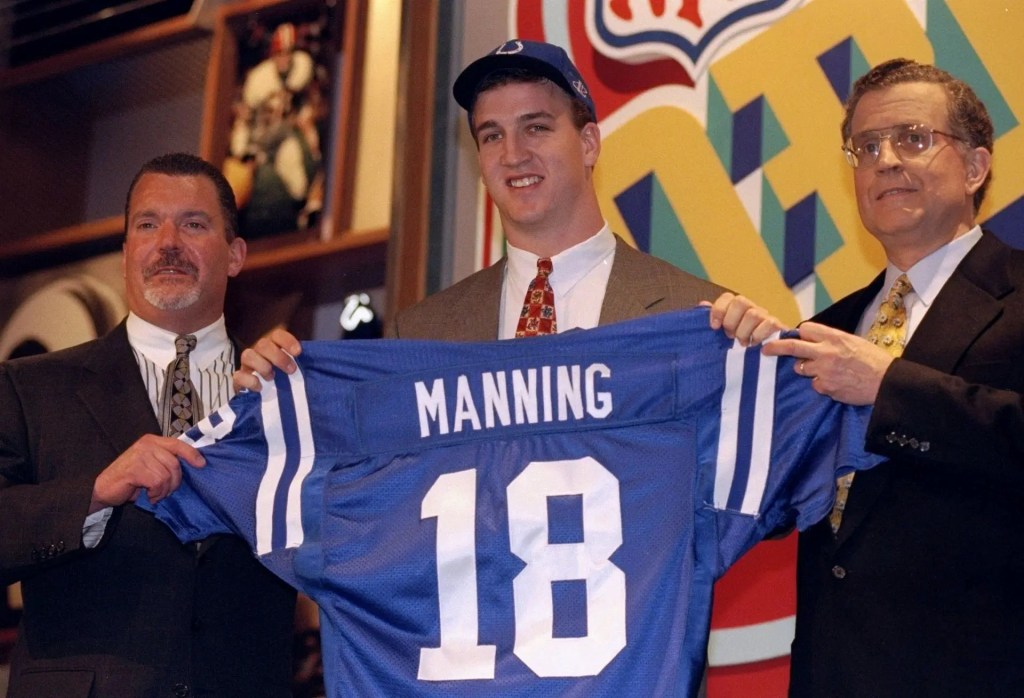
To sit or not to sit, this has been the question for NFL coaches since the beginning of the draft began. Many of the NFL’s greats took some time to learn behind an established veteran before becoming the starting quarterback for their respective teams and with players such as Tom Brady, Patrick Mahomes, and Aaron Rodgers dominating the league it is hard to argue with the results of this method. Despite these stories, for some quarterbacks, like Ben Roethlisberger, success is near instantaneous, as he learned leading the Steelers to a 13-1 record in his starts. Other times, a rookie quarterback will struggle to find their footing on a poorly equipped team before eventually coming into their own as their career continues, like Peyton Manning who has the record for rookie interceptions with 28 in 1998.
While these quarterbacks were able to write success into their stories, in recent years it seems that more rookies than ever are failing to make an impact and receding to the bench as their aspirations fade. The average time before being benched for rookie quarterbacks who start their initial season has fallen to 2 seasons. If we look back two years prior to the 2022 NFL draft, we would find that only Brock Purdy is currently starting. If we were to include 2021, we would only add one additional player in Trevor Lawrence as a current starter in 2024. Well, you may be thinking, the draft classes prior were talent heavy and there are only 32 positions available. To that point you would be right, the draft classes before 2021 were undeniably deep at the quarterback position, however many of the success stories from those drafts, like Baker Mayfield and Sam Darnold, were passed over and released by their team before finding their footing elsewhere. With Bryce Young and Anthony Richardson, notably being benched just this year it is evident that this issue is continuing to grow for the league as players struggle to find their way.

The initial issue for many young quarterbacks is situation. Teams in the position to draft rookie quarterbacks often earned those draft picks through abysmal play and are stocked with underperforming players. Many general managers recognize this issue, however it’s not as simple as signing the best players everywhere. With the salary cap, the front office needs to prioritize its approach which leads into the paradoxical decision of investing in power or skill. If you neglect the line and invest in elite skill players your quarterback will be running for his life trying to get the ball downfield. However, if you invest in your line, your quarterback will be placing perfect balls from a clean pocket into receivers who struggle to catch and get open. The predicament is only compounded by the fact that when a team drafts a start quarterback an owner expects production. The expectation of instant success with a new quarterback is so often unfulfilled. As the season ends the owner often decides some other coach might perform better with his “perfectly assembled” team and an additional level of inconsistency and unfamiliarity is added as a young quarterback is forced to learn offense after offense until the owner decides that it is in fact the player that is the problem.
It would be inappropriate to pin all of the lack of development on the front office and coaching staffs, however. The college game has changed, and with it so too has the structure of the collegiate offense. Starting with players like Cam Newton and Lamar Jackson, athleticism at the quarterback position has become an invaluable trait. So long as a quarterback can scramble and make plays at the college level, flaws in their understanding of a passing game or progression may be masked. The issue is that NFL defensive linemen are more efficient at rushing the passer. While a quarterback in college could reliably count on extending a play to 4 seconds in the pocket the expectation in the NFL lies closer to 2 seconds before a decision to throw the ball is made. To the casual observer this may not seem a large difference, however, as rookie quarterback Caleb Williams has learned, this can drastically drive up a team’s sack numbers.

With the scrambling dominant quarterback play in college, so too comes additional ability for improvisation. When players move to adjust to a mobile quarterback’s movement, they often struggle to stay in their appropriate coverage opening holes in the defense. Without the ability to create this level of chaos and improvisation many rookie quarterbacks have become reliant on a pure progression based offensive style where they move from one route to the next individually checking to see if a receiver is open before continuing on. While there are some checks this sort of play style operates in a way which ignores the defensive coverage opting to find the route which becomes open. Conversely, in the NFL players are expected to diagnose a defense and anticipate which route will be open preemptively, hastening their decision making. The leap from pure progression to a diagnostic style is a harsh and complicated learning curve which has caused many coaches to lean into the progression style in the NFL, however its success has been limited by its somewhat rigid approach to offense.
With an ever-growing number of play based issues combined with the need for a coach to help a 22-year-old quarterback mature and adjust to the life of a professional athlete the outlook can seem bleak for many fans around the league. There is still hope, however, as there is a proven answer to how to solve the young quarterback dilemma: patience. It’s not a satisfying answer, but allowing an offensive coordinator and quarterback time to develop and grow while you build a successful team around them is the best way to make your team successful. The throughline for every great quarterback in the NFL has been consistency of quality coaching and a surrounding of quality players. We live in an era where anything we want is at the tip of our fingers, and billionaire owners have never been a patient collective. If, however, they could allow their quarterbacks the space and consistency to develop into stars they may end up becoming a profitable and winning addition to their team. It will not always work out for owner’s either, as the Giants are discovering with QB Daniel Jones, but the risk is what makes sport so amazing, if there were no stakes we wouldn’t watch. So, bet on your team and hold firm as long as you can, because the constant rookie quarterback shuffle is an unbearable experience of which no fan wants to partake.
 Sports Talk
Leave a comment